Private Property No Rights of Way 2017
ゲリラパフォーマンス ドキュメンテーション guerrilla performance video documentation
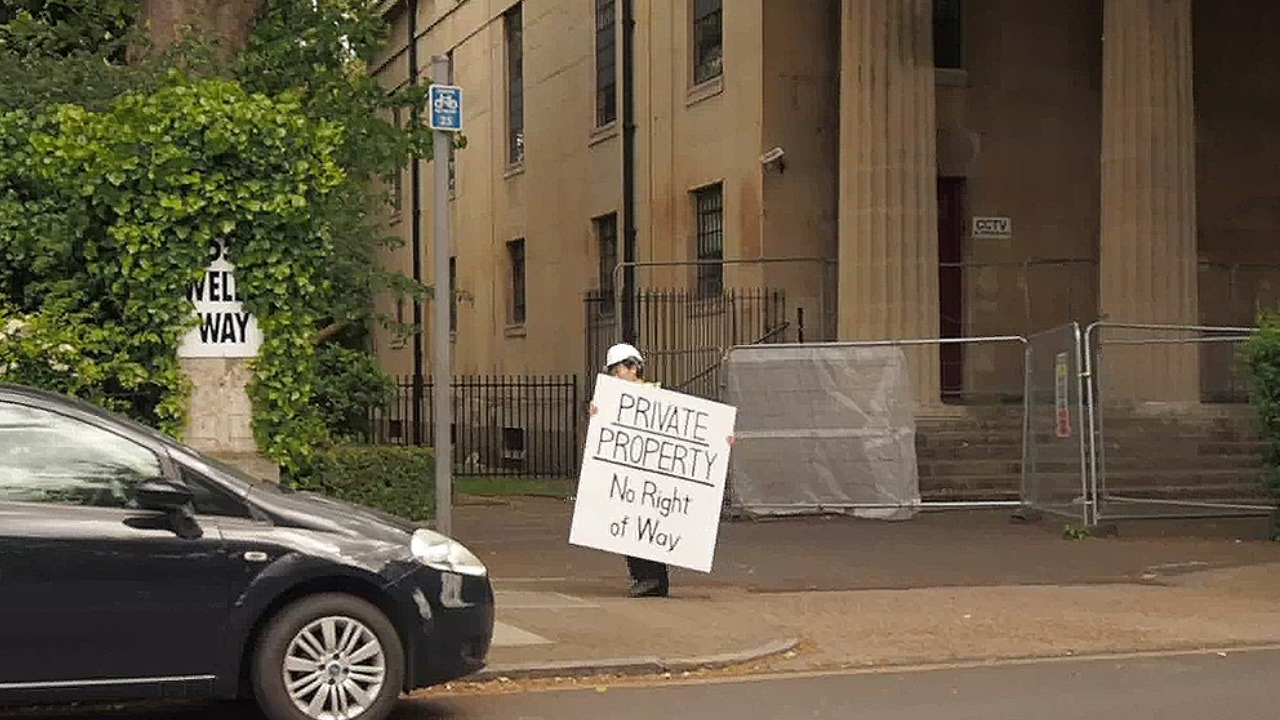
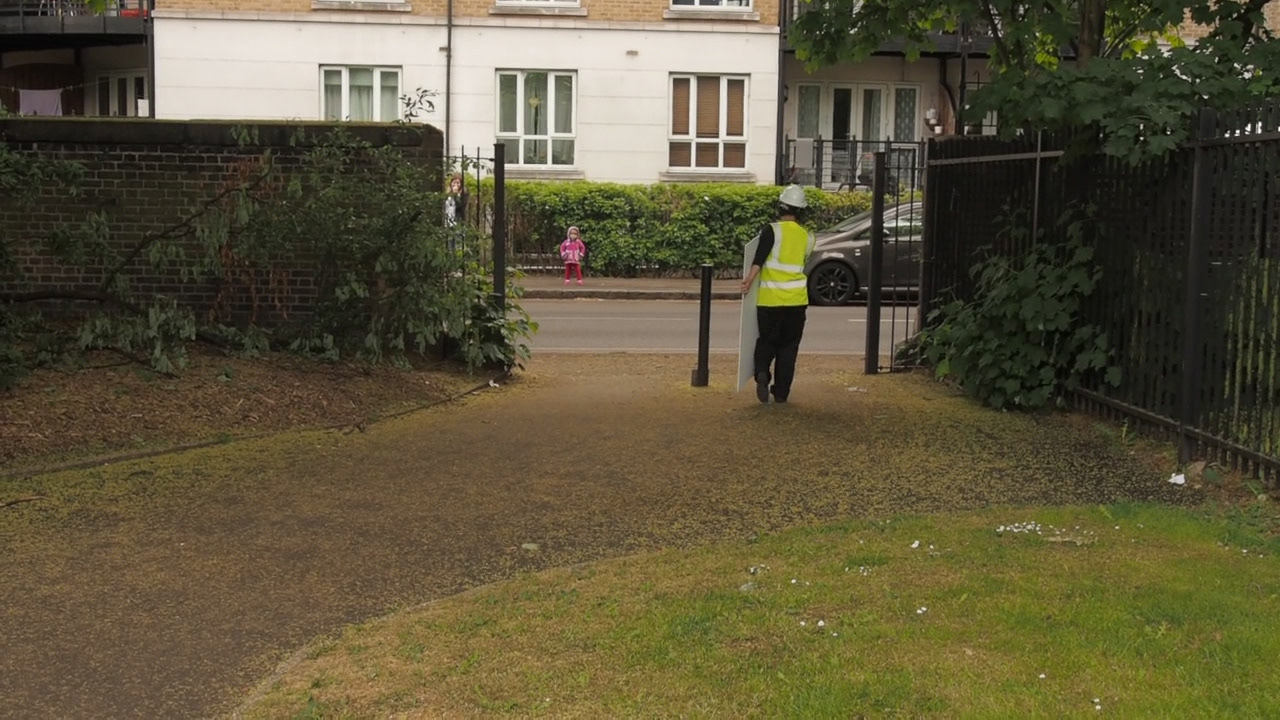
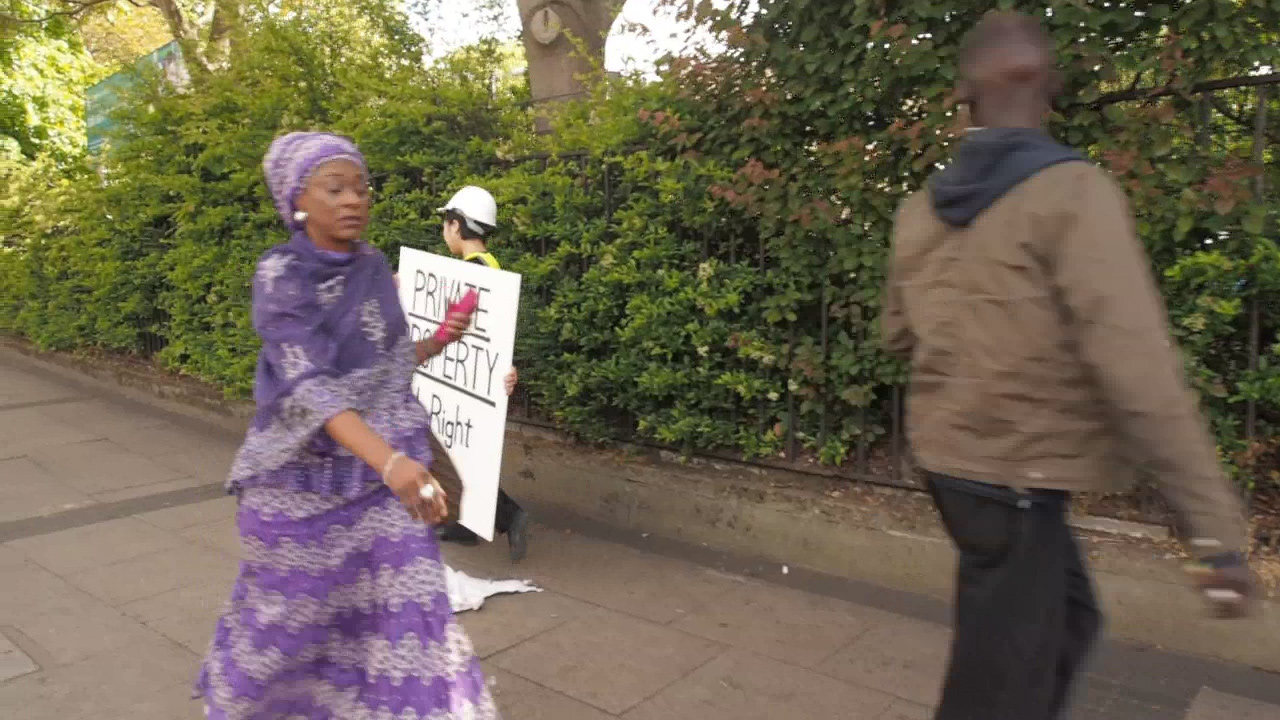
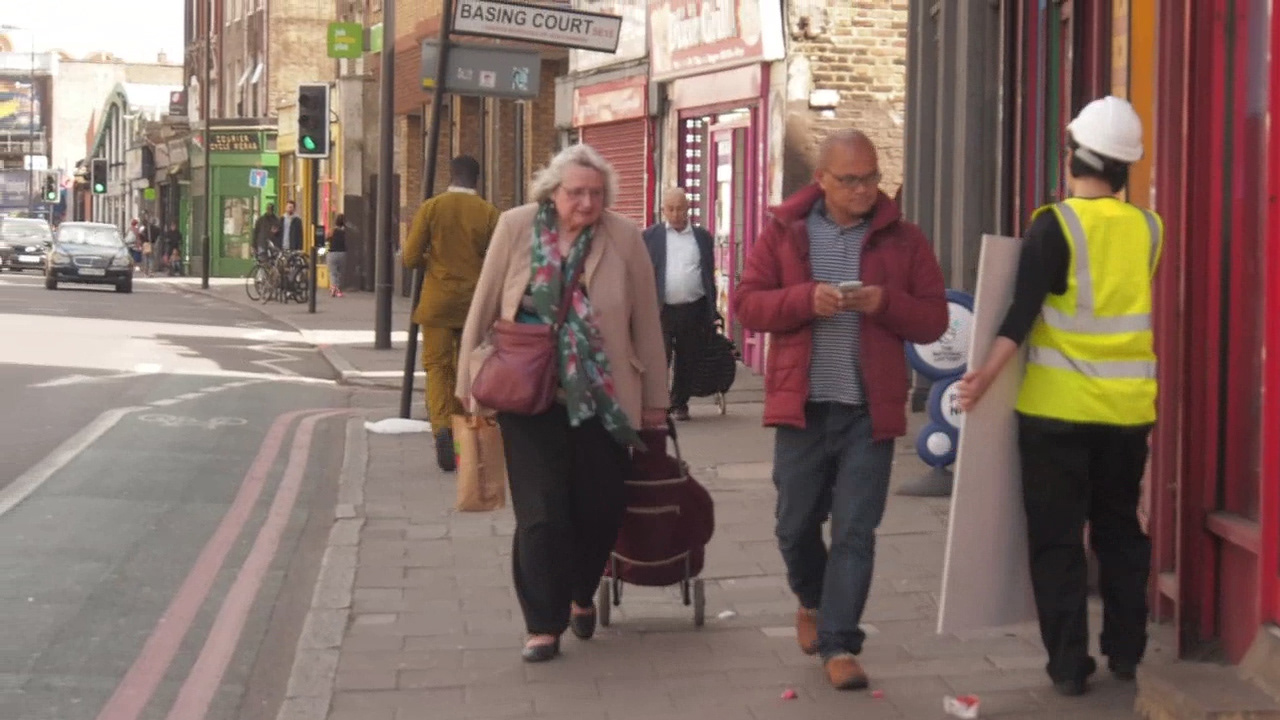
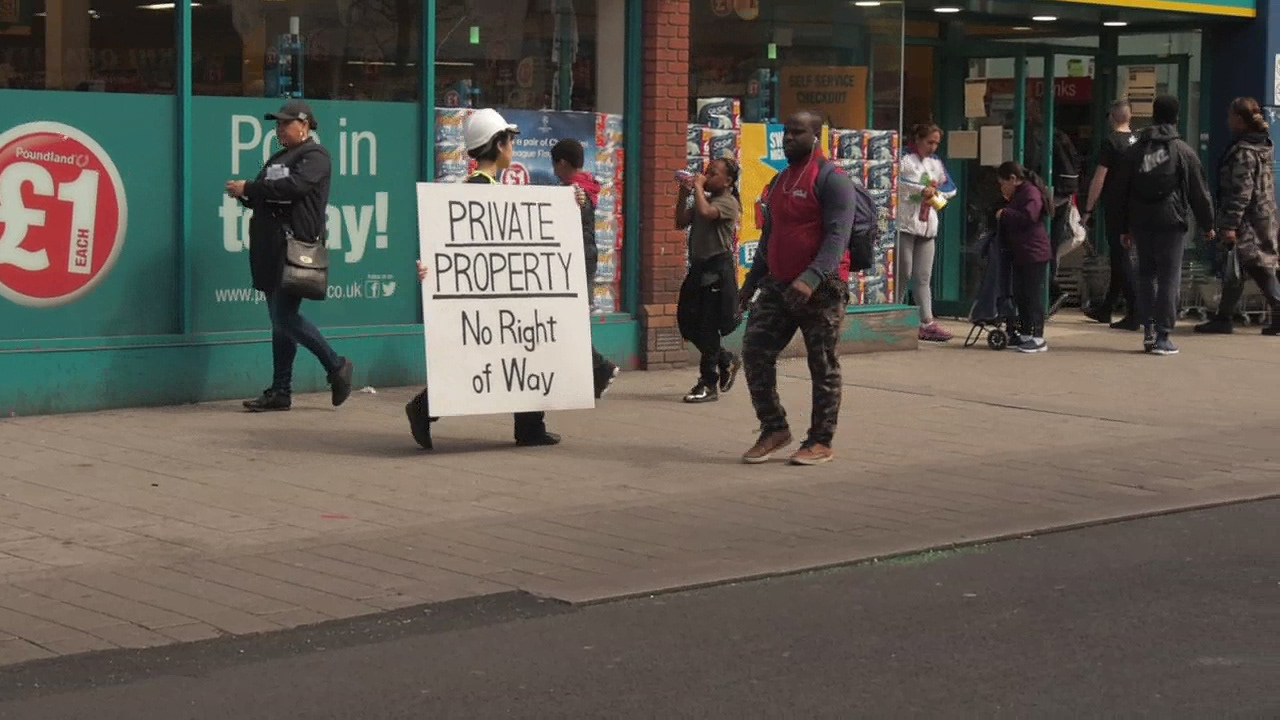
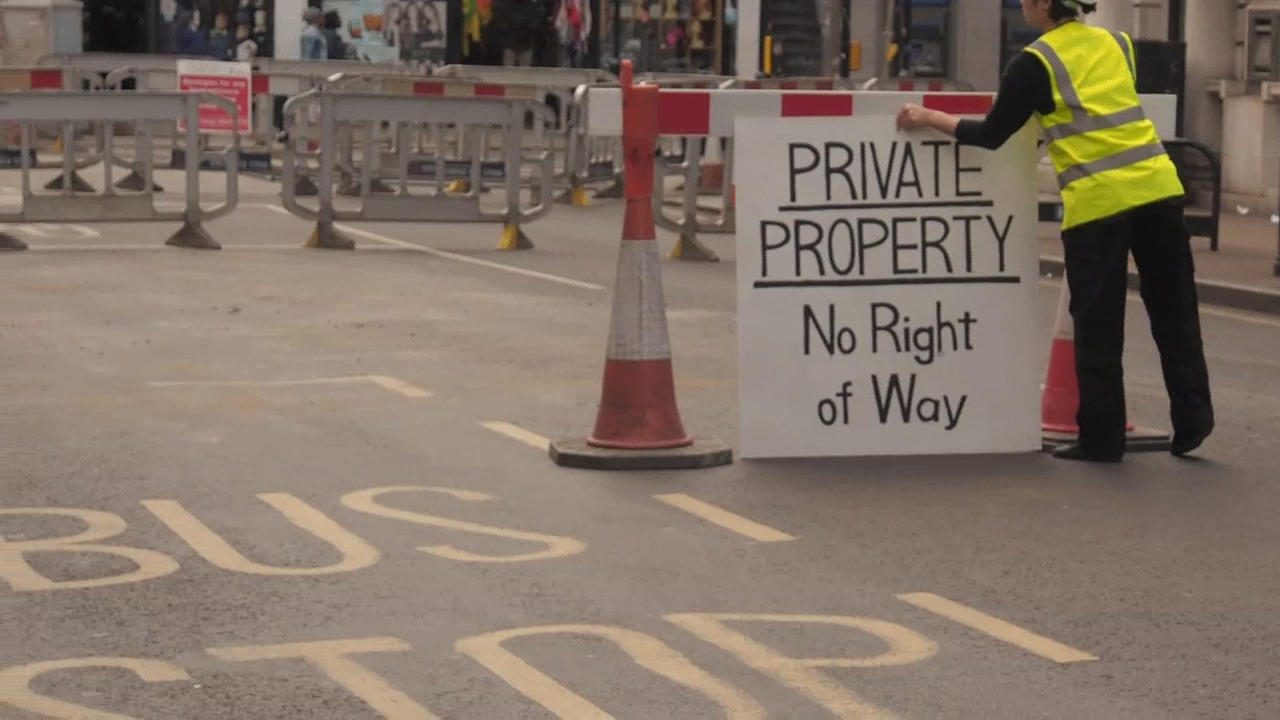
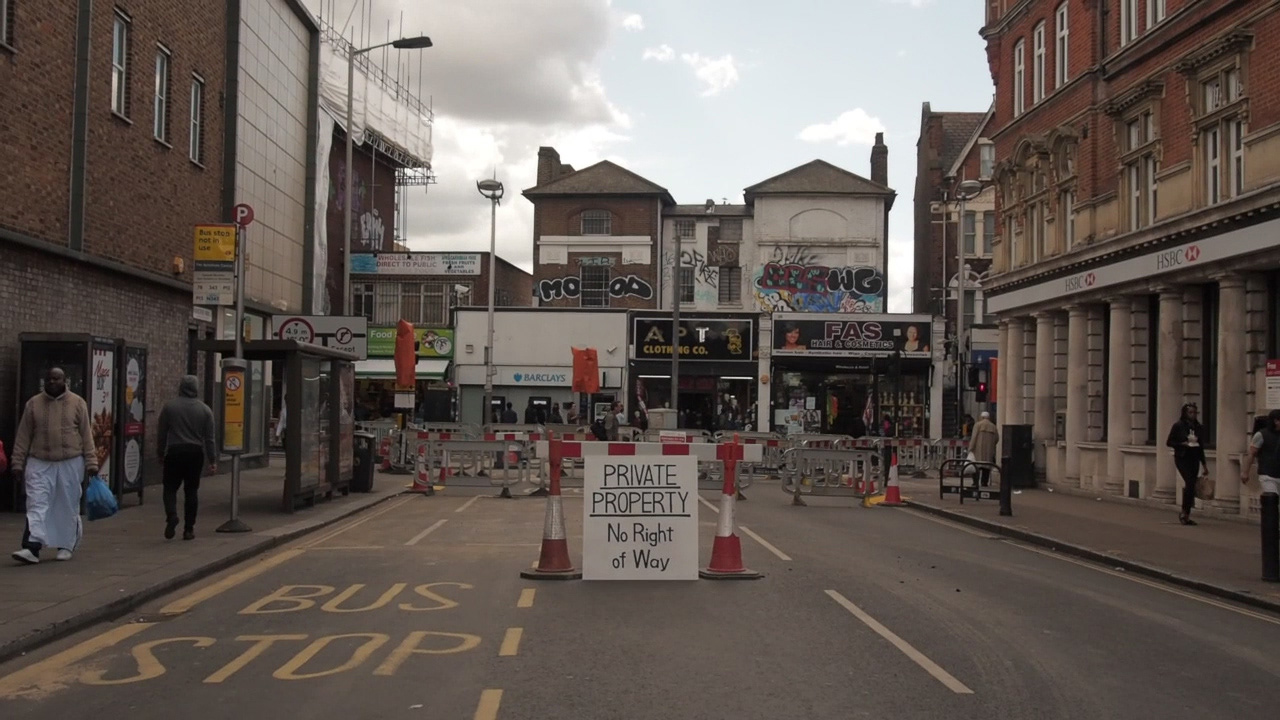
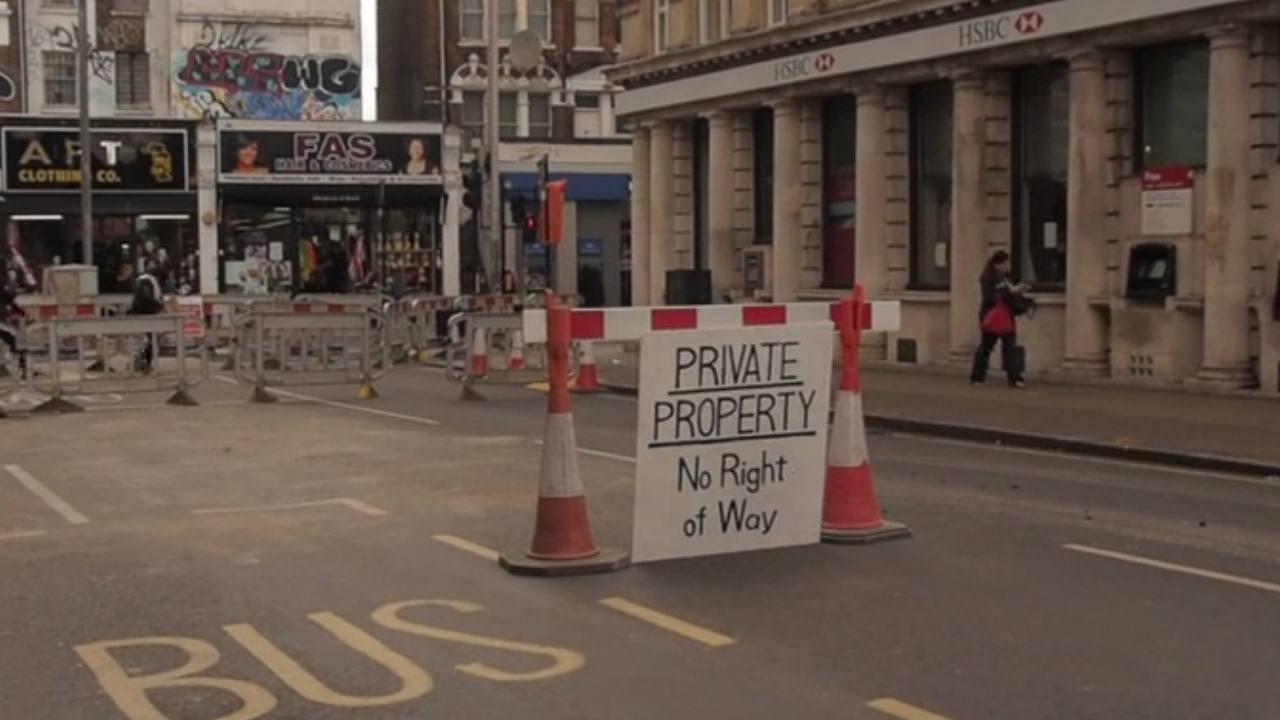
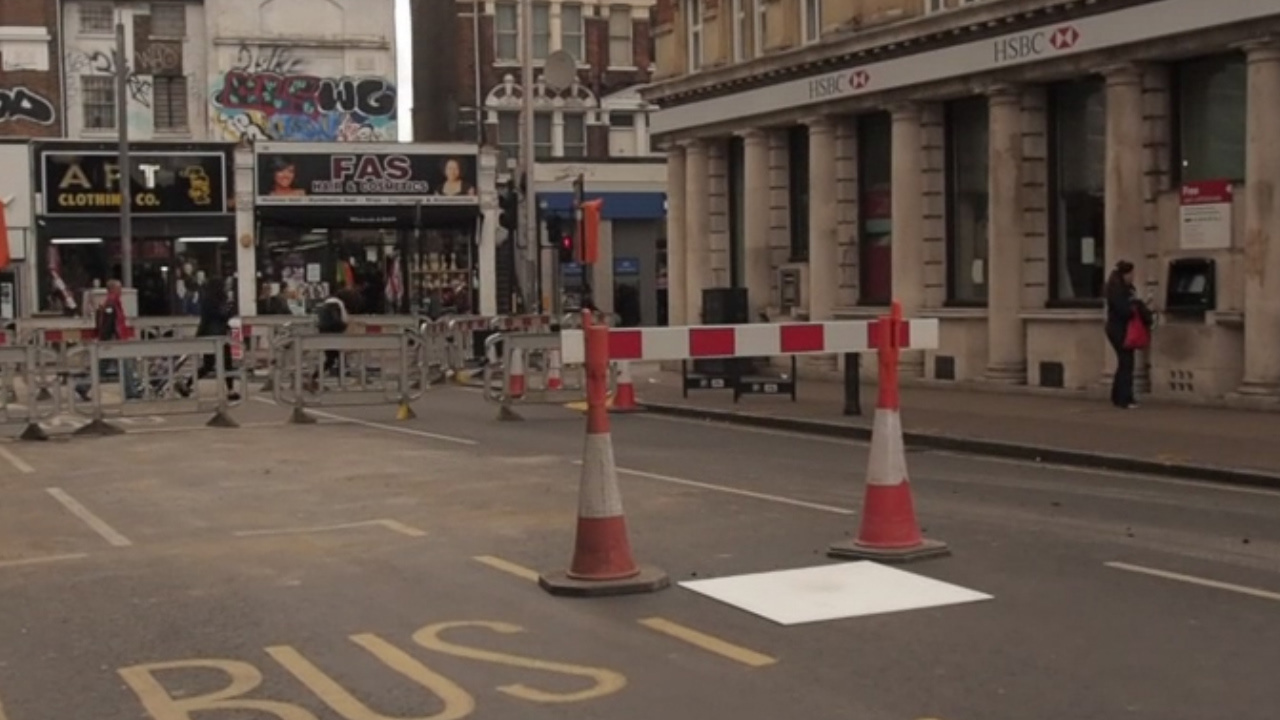
2016年のアメリカにおけるトランプ第一次当選に続き、英国のEU離脱(Brexit)という政治的転換を移民としてイギリスで体験していた作家は、国境や国籍、帰属をめぐる言説が急速に硬化するなかで、「private」とは何かという問いに直面していた。本映像作品は、南ロンドンのCamberwell周辺にあるキリスト教会の正面に複数設置されていた看板「PRIVATE PROPERTY / NO RIGHTS OF WAY(私有地立ち入り禁止)」を発見した場所から出発する。その建物が難民シェルターとして使用されていたことから、公共、宗教施設、私有地、支援と隔離が交錯する状況が浮かび上がった。救済のための共同体の開かれた場として想像されがちな教会の前で、立ち入り拒否の言葉が過剰に主張されていたことに、発見当初、作家は強い違和感を覚えた。そこで作家は、看板を移動させる行為によって、複数の「private」の領域が都市の中で立ち現れるのではないかと考えた。パフォーマンスでは、手書きの看板が作家自身の歩行に沿って都市のなかを反復的に移動していく過程で、境界そのものの不安定さが可視化されていく。
Following the first election of Donald Trump in the United States in 2016 and the United Kingdom’s decision to withdraw from the European Union (Brexit), the artist experienced these political shifts firsthand while living in the UK as an immigrant. As exclusionary discourses surrounding borders, nationality, and belonging rapidly intensified, the question of what constitutes the “private” emerged as a critical point of inquiry within the artist’s practice.This video work originates from an encounter in Camberwell, South London, where multiple signs reading “PRIVATE PROPERTY / NO RIGHTS OF WAY” were installed in front of a Christian church. The site was later identified as having functioned as a refugee shelter, revealing a layered spatial condition in which public space, religious infrastructure, private ownership, support, and exclusion coexist and conflict. The conspicuous repetition and scale of the signage—asserting restriction and denial of access—stood in stark contrast to the church’s conventional association with openness, sanctuary, and communal care. By foregrounding the language of exclusion embedded in the term “private,” the work exposes the paradox through which spaces designated for protection simultaneously operate as mechanisms of separation. Refugees and migrants are rendered both subjects of aid and objects of containment, situated within a structure that oscillates between hospitality and control.In response, the artist developed a performative action in which a hand-written version of the sign is carried and repositioned through the city. As the sign moves in rhythm with the artist’s walking body, the boundaries it denotes are no longer fixed to a single site but are continuously re-enacted across the urban landscape. Through this process, borders cease to function as stable lines and instead emerge as contingent, mobile, and situational spatial conditions—produced through language, movement, and power relations.